Disclaimer / Information Only Statement: The information in this article is provided for general informational and educational purposes only. It is not a substitute for professional mechanical diagnosis, driver training, legal advice, or OEM service guidance. Readers are responsible for evaluating their own circumstances, following company policies, manufacturer recommendations, and all applicable laws and regulations. By using this information, readers acknowledge that All Star Heavy Haul & Towing is not responsible for decisions made based on this content or for any loss, damage, or interruption arising from reliance on it.
A motorcoach or transit bus breaks down on I-580 climbing Altamont Pass at 11 p.m. on a Friday. Within the next hour, a dispatcher is fielding calls from passengers, the repair facility, and the insurance carrier—all while a bill is being calculated on the side of the road. Bus and motorcoach towing is among the costliest emergency services in commercial transportation, and most operators discover how expensive it is only when they are already in the middle of a crisis. This guide breaks down what drives the cost of a bus or motorcoach tow, how the billing structure works, what commercial insurance typically covers (and where the gaps are), and what questions to ask a heavy-duty towing company before they ever hook up your vehicle.
Why Bus and Motorcoach Towing Is Priced Differently from Light-Duty Tows
Passenger carriers—transit buses, charter motorcoaches, entertainer coaches, and shuttle vehicles—fall squarely into the heavy-duty towing category. That means the pricing model, the equipment deployed, and the operator qualifications all work on a different scale than a standard car tow. A few key reasons drive the cost premium:
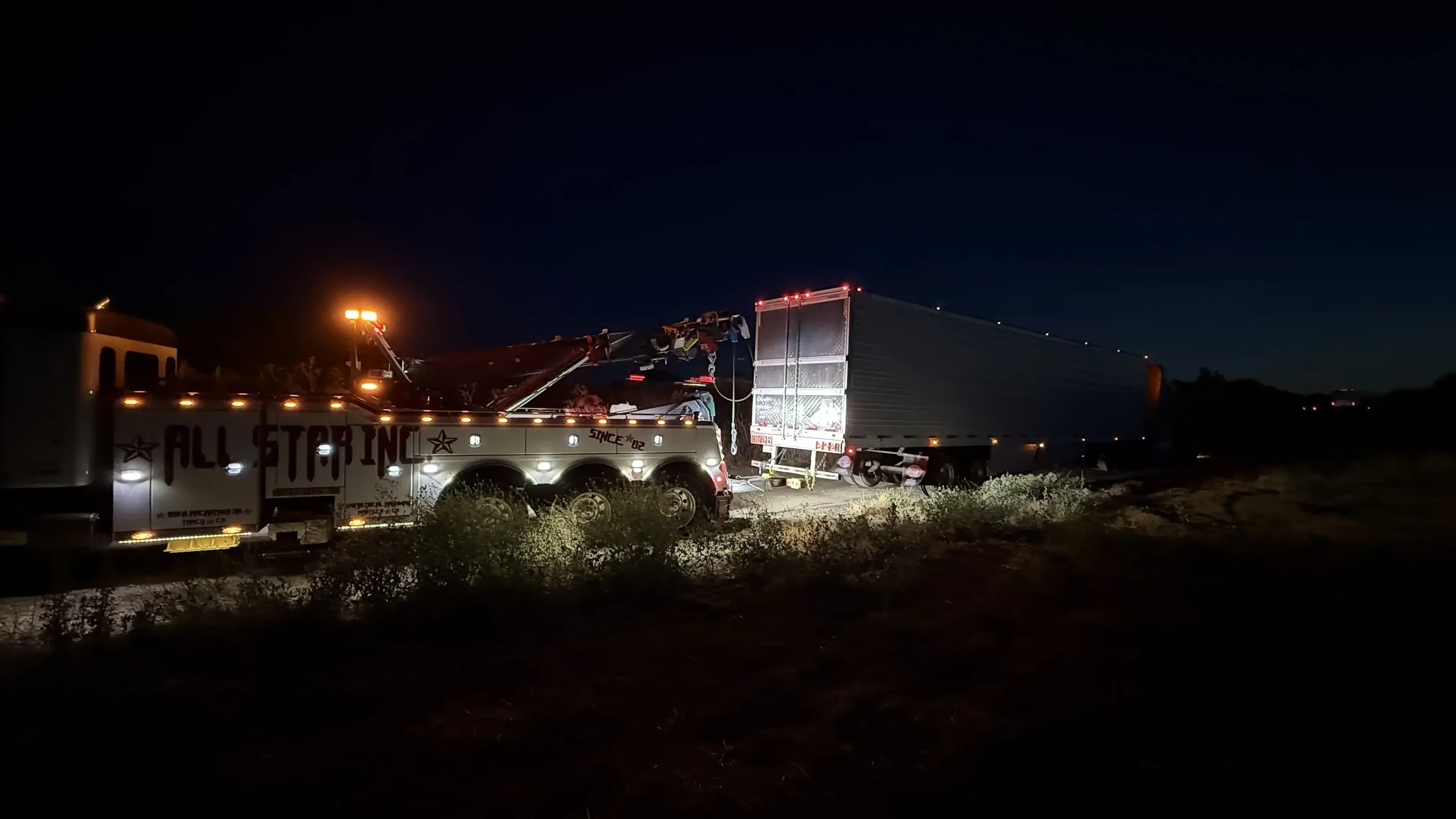
- Specialized equipment is mandatory. A standard flatbed cannot safely recover a 40,000-pound motorcoach. Heavy wreckers, rotators, and airbag trailer systems are required—and those rigs are expensive to operate and maintain. As one industry source notes, heavy-duty towing covers buses and large commercial vehicles because "the equipment, licensing, and on-scene complexity are all on a different scale."
- Certified operators are required. The Federal Motor Carrier Safety Administration (FMCSA) sets the federal threshold for commercial motor vehicles at a gross vehicle weight of 26,001 pounds or more—a threshold that virtually every full-size bus clears. Operating a heavy-duty wrecker in these combinations requires at minimum a Class A or Class B CDL.
- On-scene time is longer. Motorcoaches often cannot be rigged and moved the way a semi-tractor can. Clearance, body configuration, and low ground clearance all contribute to extended hook-up time, which adds to the labor portion of the bill.
- Federal regulations prohibit shortcuts. FMCSA regulations under 49 CFR § 392.63 explicitly prohibit towing or pushing a disabled bus with passengers still aboard, except in limited safety-exception circumstances. That means passenger management and safe egress must happen before the tow truck even begins rigging—adding time and logistical complexity to every call.
How the Bill Is Structured: Hookup Fee, Mileage, and Surcharges
Heavy-duty towing bills—including bus and motorcoach calls—follow a three-part structure that operators and fleet managers should understand before an incident occurs.
- Base hookup or call-out fee. This covers the cost of getting the right rig to scene, the operator's time, and the initial rigging labor. For heavy-duty work, industry data places this fee between $400 and $1,000 for the first ten miles—substantially higher than the $75–$125 base seen on light-duty calls.
- Per-mile rate. Once the vehicle is moving, a per-mile charge accumulates. For heavy-duty equipment, published 2026 rate data shows per-mile charges ranging from $7 to $15 per mile beyond the initial distance included in the hookup fee. The corridor between, say, Patterson and Livermore via I-5 and I-580 easily spans 60 or more miles—meaning mileage alone can add $420–$900 to a bill.
- Surcharges. After-hours dispatch (including nights, weekends, and holidays), terrain difficulty, and specialized equipment requirements each add cost. Industry benchmarks consistently show after-hours and emergency dispatch premiums of 25–50% on top of standard heavy-duty rates. A Saturday-night breakdown on Patterson Pass Road, where steep grades and limited turnout space complicate rigging, is a very different call than a daytime job on a straight section of I-5.
Recovery vs. Tow: When the Bill Gets Significantly Larger
A straightforward tow—meaning the bus is upright, accessible, and on a paved surface—is the lower-cost scenario. Recovery is a separate billing category, and it applies any time the vehicle is off-road, overturned, in a ditch, or otherwise not ready to be rigged directly. Complex recovery operations involving rotator cranes bill at a separate hourly rate entirely—often $500–$750 per hour for the rotator alone, independent of the tow fee. Winching operations on stuck or embedded vehicles are also typically billed as a separate line item. For a motorcoach that has left the roadway on a curve along Highway 132 or slid off the shoulder on a winter run through Altamont Pass, the final invoice can run well into five figures once recovery labor, equipment time, and the tow mileage are combined. Dispatchers and fleet managers should understand that published towing rate sheets typically reflect towing costs, not recovery costs. The two are not the same.
How Commercial Insurance Handles Bus and Motorcoach Towing Claims
Insurance coverage for bus and motorcoach towing claims is one of the most misunderstood cost areas in commercial passenger transportation. Several consistent patterns emerge from how these claims are handled.
- Towing coverage is not automatic. Some commercial auto insurance policies cover heavy-duty towing while others require an added roadside assistance rider. The difference between having that rider and not having it can mean thousands of dollars in uncovered exposure on a single call.
- Policy caps are frequently lower than real-world costs. Commercial auto policies often cap towing reimbursement at $500–$5,000—a range that may be adequate for a light-duty fleet vehicle but falls short of what a full motorcoach tow and recovery actually costs. Operators carrying minimum limits may find they're responsible for a significant balance.
- Reimbursement versus direct-pay structures differ. In some cases, the insurer pays the towing operator directly. In others, the motor carrier pays out of pocket first and submits for reimbursement afterward. Knowing which structure applies under your policy before an emergency occurs is critical—a claim submitted incorrectly or after an unauthorized dispatch may face denial.
- Mileage limits matter. Many roadside assistance riders cap coverage at 5–15 miles of towing distance. A motorcoach stranded on I-205 near Tracy that needs to reach a repair facility in Livermore or Patterson is going to exceed standard mileage caps on nearly any basic policy.
The single most consistent piece of guidance across commercial insurance contexts: review your policy's towing and recovery language before an incident, not during one. Check specifically for towing sub-limits, recovery operation exclusions, mileage caps, and pre-authorization requirements. Your insurance agent—not your towing provider—is the right resource for policy interpretation questions.
Bus and motorcoach towing from Tracy and Manteca →
What to Ask a Towing Company Before They Hook Up Your Bus
Not every heavy-duty towing company has the right equipment or certification to handle a motorcoach safely. Before authorizing a hook-up, fleet managers and dispatchers should confirm the following with the responding operator:
- Do you have equipment rated for this vehicle's GVWR? A standard medium-duty wrecker that arrives on scene may not be able to legally or safely tow a fully-loaded passenger coach. Confirm the wrecker class before work begins.
- Is your operator CDL-qualified for this vehicle combination? FMCSA's guidance is clear: if the gross combination weight rating of the tow truck and towed vehicle exceeds 26,001 pounds, the operator needs a Group A CDL. For a motorcoach tow, that threshold is almost always crossed.
- Will recovery and towing be billed separately? If the vehicle requires any winching, repositioning, or extraction before it can be towed, ask for a written acknowledgment that these are separate line items and get an estimated range for each.
- What is your after-hours dispatch rate? Confirm whether you will be charged a flat surcharge or a percentage premium, and make sure the answer is documented before work begins.
- Where will the vehicle be transported? Confirm the destination is authorized under your insurance policy. Towing to an unauthorized location—even an otherwise reputable facility—can complicate or void a reimbursement claim.
The I-580 / I-205 / I-5 Corridor: Why Location Affects Your Towing Bill
Geography is a direct input into heavy-duty towing cost—not just through mileage, but through terrain and response time. The freight and passenger corridor connecting Livermore, Tracy, Manteca, and Patterson through Pleasanton presents specific cost variables that operators running this region should factor into their contingency budgets. The Altamont Pass section of I-580 between Livermore and Tracy involves sustained grades that complicate rigging of heavy vehicles and, in some configurations, require additional equipment or extended setup time. Patterson Pass Road and sections of I-5 approaching Crows Landing involve low-traffic, difficult-access scenarios where response times are longer and off-pavement recovery risk is real. I-680 through the Pleasanton–Livermore zone runs through developed commercial areas with tighter traffic management constraints. Knowing which portion of this corridor your route runs—and pre-identifying a qualified heavy-duty towing provider who operates from yards within the corridor rather than staging from a distant location—is one of the most reliable ways to reduce both cost and downtime when a bus or motorcoach goes out of service.
Fleet and Dispatch Takeaways
Motorcoach and bus towing costs are not predictable from light-duty pricing tables. The equipment is different, the operator qualifications are different, and the billing structure is different. For fleet managers and dispatchers operating passenger vehicles through the Tracy–Manteca–Livermore–Pleasanton–Patterson corridor, the practical steps that reduce total cost of an incident are:
- Pre-qualify a heavy-duty towing provider who stages from within your operating corridor—not one who bills response mileage from a distant yard.
- Audit your commercial insurance policy for towing sub-limits, recovery operation language, mileage caps, and pre-authorization requirements before your next dispatch season.
- Keep a written record of the towing company's rate card and equipment class on file—not just a phone number—so dispatchers can make informed decisions during an incident.
- Understand that a recovery call and a tow call are billed differently. Budget for both when a vehicle is off-road or overturned.
- Document everything: the dispatch time, the response time, the work performed, and the destination facility. Complete documentation is the foundation of a successful insurance reimbursement claim.
For fleet accounts and operators who run regular passenger service on the I-580, I-205, I-5, or I-680 corridors, a standing relationship with a qualified heavy-duty towing provider—rather than a cold call in a crisis—typically means faster response, transparent pricing, and smoother insurance coordination. Learn more about our commercial fleet towing accounts or review our coverage area and equipment at our Tracy yard location.